Authentication Patterns: JWT, Sessions, and Modern Auth
JWT vs sessions, OAuth, refresh tokens, and passwordless authentication. Here's how to choose the right authentication approach for your application.
Jason Overmier
Innovative Prospects Team
Authentication is the front door to your application. Get it wrong, and users can’t access their accounts. Get it really wrong, and attackers can access everyone’s accounts. Here’s how to navigate the modern authentication landscape.
Quick Comparison
| Approach | Stateful | Scalability | Security | Complexity |
|---|---|---|---|---|
| Server Sessions | Yes | Limited | High | Low |
| JWT | No | Excellent | Medium | Medium |
| OAuth/OIDC | Depends | Excellent | High | High |
| Passwordless | No | Good | High | Medium |
Server Sessions
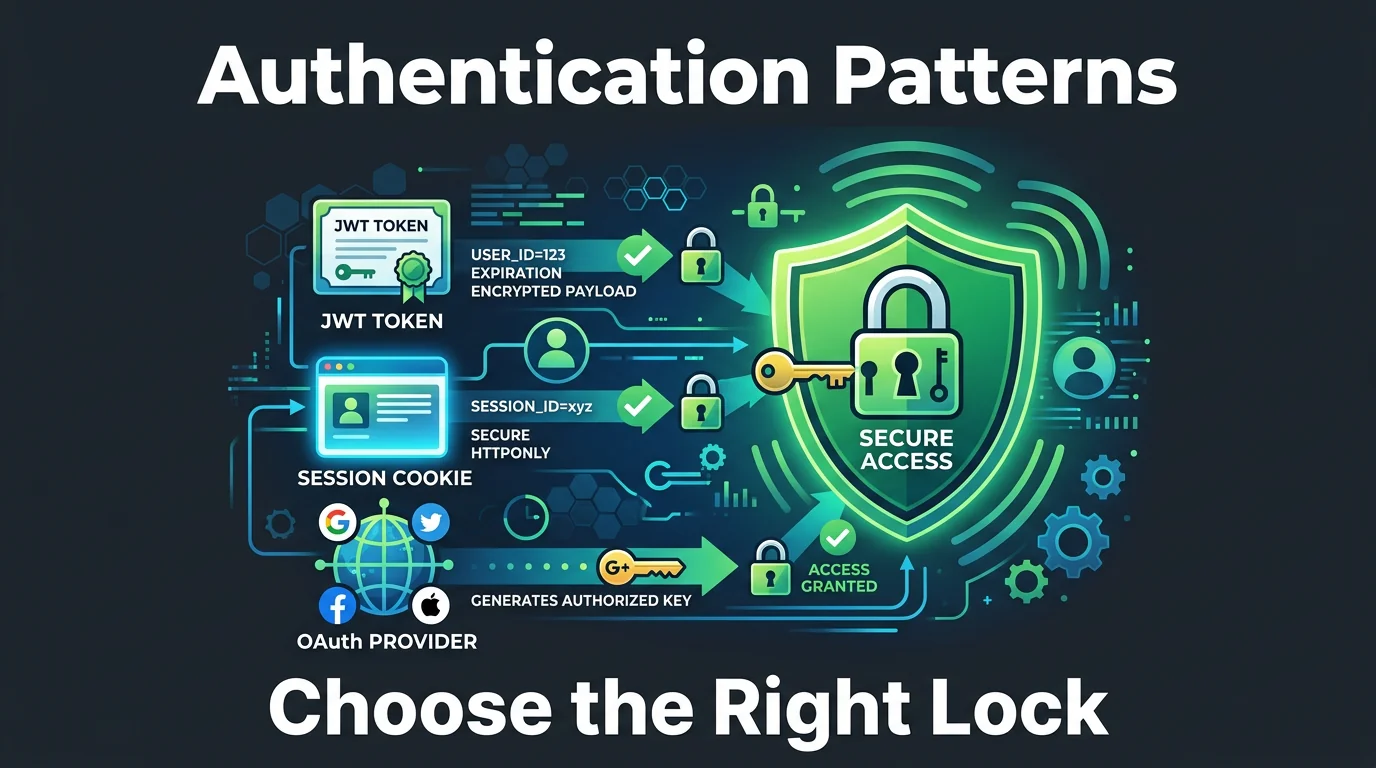
How It Works
- User logs in with credentials
- Server creates session, stores in database/memory
- Server sends session ID cookie to browser
- Browser sends cookie with each request
- Server looks up session, validates request
When to Use
| Scenario | Good Fit? |
|---|---|
| Traditional web apps | Yes |
| Single server | Yes |
| Need to revoke instantly | Yes |
| Microservices | No |
| Mobile apps | No |
Trade-offs
| Pro | Con |
|---|---|
| Simple implementation | Server memory/bloat |
| Instant revocation | Scaling challenges |
| No token management | Session database required |
JWT (JSON Web Tokens)
How It Works
- User logs in with credentials
- Server creates signed JWT with claims
- Server sends JWT to client
- Client stores JWT (localStorage, memory)
- Client sends JWT in Authorization header
- Server verifies signature, extracts claims
When to Use
| Scenario | Good Fit? |
|---|---|
| Microservices | Yes |
| Mobile apps | Yes |
| Stateless services | Yes |
| Need instant revocation | No |
| High security | Add refresh tokens |
Trade-offs
| Pro | Con |
|---|---|
| Stateless | Cannot revoke instantly |
| Scales horizontally | Token size overhead |
| Works across services | Expiration management |
OAuth 2.0 / OIDC
How It Works
- User clicks “Login with Google”
- App redirects to OAuth provider
- User authenticates with provider
- Provider redirects back with authorization code
- App exchanges code for access token
- App uses token to access user info
When to Use
| Scenario | Good Fit? |
|---|---|
| Consumer apps | Yes |
| Want social login | Yes |
| Enterprise SSO | Yes |
| Simple internal tool | No |
Trade-offs
| Pro | Con |
|---|---|
| No password storage | Complex implementation |
| Social proof | Provider dependency |
| Better security | Redirect complexity |
Modern Considerations
Refresh Tokens
| Method | Implementation | | ------ | -------------- | ------------ | | Sliding expiration | Refresh token extends on each use | | Absolute expiration | Fixed expiration time from issue | | Rotation | New refresh token on each use |
Token Storage
| Storage | XSS Risk | Recommendation |
|---|---|---|
| HttpOnly cookie | Protected | Preferred for web |
| localStorage | Vulnerable | Avoid |
| sessionStorage | Vulnerable | Avoid |
| Memory | Protected | Best for mobile |
Common Pitfalls
| Pitfall | Impact | Prevention |
|---|---|---|
| JWT in localStorage | XSS vulnerability | Use HttpOnly cookies or memory |
| No refresh tokens | Poor UX | Implement refresh token rotation |
| Long JWT expiration | Security risk | Short expiration + refresh |
| Signing with weak secret | Token forgery | Use strong, rotated secrets |
| Not validating tokens | Security bypass | Always verify signature and claims |
Authentication choice impacts security, scalability, and user experience. If you need help implementing authentication for your application, book a consultation. We’ll help you choose the right approach and implement it securely.