How to Choose the Right Tech Stack for Your Custom Software Project
A comprehensive guide to selecting technologies that scale with your business, from MVP to enterprise.
Jason Overmier
Innovative Prospects Team
Choosing the Right Tech Stack
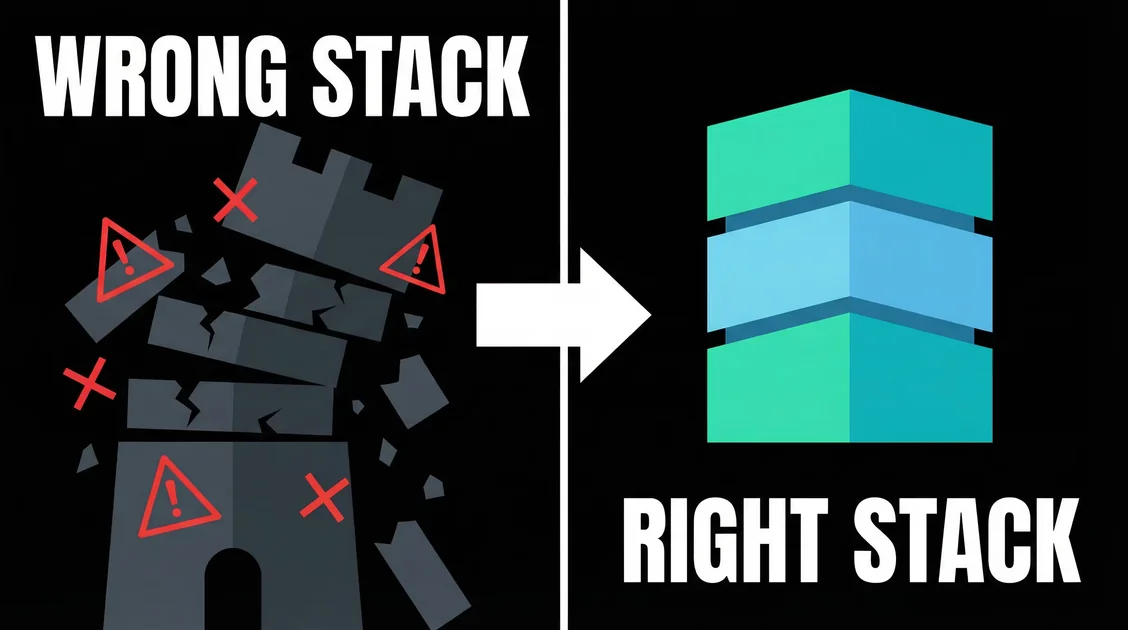
Building custom software starts with a foundational decision: what technology stack will you use? This choice impacts everything from development speed to long-term maintainability, hiring costs, and scalability.
What Is a Tech Stack?
A tech stack is the combination of programming languages, frameworks, and tools used to build your application. It typically includes:
- Frontend: What your users see (React, Vue, Next.js, mobile frameworks)
- Backend: Your server logic (Node.js, Python, Go, Java)
- Database: Where data lives (PostgreSQL, MongoDB, Redis)
- Infrastructure: Cloud providers and DevOps tools (AWS, Docker, Kubernetes)
Key Considerations
1. Your Team’s Expertise
The best stack is one your team knows well. Learning a new technology on a deadline adds risk. If you’re hiring a development partner, ask about their core competencies.
2. Time to Market
Need an MVP fast? Frameworks like Next.js (web) or React Native (mobile) accelerate development with pre-built components and patterns. Custom solutions from scratch take longer.
3. Scalability Requirements
If you anticipate rapid growth, choose technologies proven at scale:
- PostgreSQL for relational databases (handles millions of records)
- Redis for caching (reduces database load)
- Go or Node.js for high-performance APIs
4. Ecosystem & Libraries
A rich ecosystem means fewer custom solutions. JavaScript/TypeScript has npm: the world’s largest package registry. Python excels in data science. Go is great for microservices.
What We Recommend
For most web applications in 2026:
| Layer | Technology | Why |
|---|---|---|
| Frontend | Next.js + TypeScript | SEO-friendly, fast, huge hiring pool |
| Backend | Node.js or Go | Node.js for speed, Go for performance |
| Database | PostgreSQL | Reliable, feature-rich, open-source |
| Caching | Redis | Speeds up reads, reduces database costs |
| Cloud | AWS or GCP | Enterprise-grade, scalable |
Common Pitfalls
| Pitfall | Why It Happens | Fix |
|---|---|---|
| Over-engineering early | Building for “future scale” | Start with monolith, break into services when needed |
| Chasing trends | Fear of missing out (FOMO) | Choose battle-tested, proven technologies |
| Ignoring hiring pool | Focusing on “perfect” tech stack | Prioritize popular frameworks with talent availability |
| Microservices for MVP | Read about architecture patterns | Monolith is faster to build and debug |
| Language/framework fragmentation | Different teams choosing different stacks | Standardize on core technologies |
| No long-term maintenance plan | Focus on shipping, not sustainability | Consider support cycles, deprecation risks |
When to Consider Specialized Stacks
Mobile-First
- React Native or Flutter for cross-platform
- Native (Swift/Kotlin) when performance is critical
AI/ML Features
- Python for machine learning integration
- Node.js wrappers for AI APIs
High-Scale APIs
- Go or Rust for performance
- GraphQL for flexible querying
Questions to Ask Your Development Partner
- What’s your default stack, and why?
- Have you built something similar to my project?
- What happens if we need to scale later?
- Who owns the code, and is it documented?
- What’s your approach to security and updates?
The Bottom Line
The right tech stack balances speed, scalability, and maintainability. For most businesses, that means choosing popular, well-supported technologies rather than bleeding-edge experiments.
Need help choosing the right tech stack? We’ve helped dozens of companies select and implement technology stacks that scale from MVP to enterprise. Our senior architects evaluate your requirements, timeline, and budget to recommend the right technologies, not just the trendy ones. Book a consultation to discuss your project.