Event-Driven Architecture: Patterns and When to Use It
Event-driven architecture enables loose coupling, scalability, and real-time processing. Here's when to use events versus direct API calls and how to implement it effectively.
Jason Overmier
Innovative Prospects Team
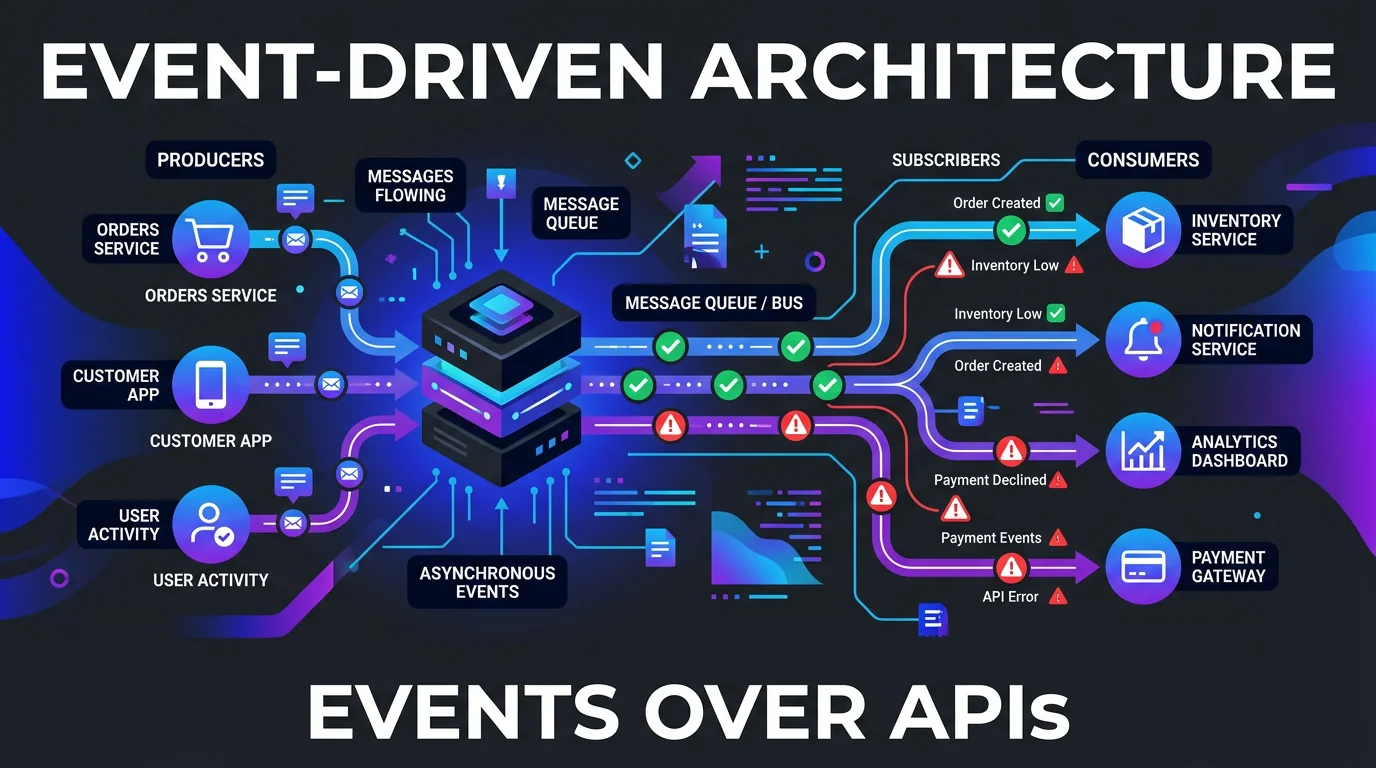
Event-driven architecture enables systems to react to changes as they happen. Instead of systems constantly polling for updates, events flow through the system, triggering actions. This pattern enables loose coupling, better scalability, and real-time processing. Here’s when to use it and how to implement it effectively.
What Event-Driven Architecture Solves
| Problem | Direct API | Event-Driven |
|---|---|---|
| Tight coupling | High - Low | |
| Scalability | Limited | Better |
| Real-time processing | Polling delay | Immediate |
| Failure isolation | Cascading failures | Contained failures |
| Complexity | Simple code, complex infrastructure |
Event Patterns
1. Event Notification
One system emits an event, other systems receive and react.
| Use Case | Event Types |
|---|---|
| User registration | UserCreated, ProfileCompleted |
| Order processing | OrderPlaced, PaymentProcessed, OrderShipped |
| System alerts | MemoryWarning, HighLoadDetected, ErrorOccurred |
2. Event Sourcing
Aggregate events from multiple sources.
| Source | Event Types |
|---|---|
| Web requests | PageViewed, ButtonClick |
| Database changes | RecordCreated, RecordUpdated |
| External systems | WebhookReceived, ApiCall |
3. Event Streaming
Continuous processing of event streams.
| Pattern | Description |
|---|---|
| Filtering | Select events matching criteria |
| Windowing | Aggregate events over time windows |
| Joining | Combine events from multiple streams |
| Splitting | Route events to multiple processors |
When to Use Event-Driven Architecture
Good Candidates
| Scenario | Why Event-Driven Works |
|---|---|
| Real-time dashboards | Need immediate updates |
| Notification systems | Push when events happen |
| Order processing | Multiple steps, async completion |
| Data synchronization | Cache invalidation on change |
| Analytics | Process events as they occur |
Poor Candidates
| Scenario | Why Event-Driven is Overkill |
|---|---|
| Simple CRUD | Direct API calls are sufficient |
| Read-heavy | No need for real-time updates |
| Small scale | Complexity not justified |
| Monolithic app | Simpler architecture works |
Common Pitfalls
| Pitfall | Symptom | Fix |
|---|---|---|
| Event spaghetti | Too many event types, Consolidate event schemas | |
| No idempotency | Duplicate event handlers | Use event sourcing or |
| Silent failures | Events lost without notice | Implement monitoring, dead letter queues |
| Ordering issues | Events processed out of order | Use correlation IDs, saga patterns |
Event-driven architecture adds complexity but enables scalability and real-time processing. If you’re considering event-driven architecture, book a consultation. We’ll help you determine if it fits your use case.