FinTech Development: PCI DSS, Security, and Transaction Reliability
Financial technology demands more than good UX. Here's what FinTech founders need to understand about compliance, security, and building systems that handle money reliably.
Jason Overmier
Innovative Prospects Team
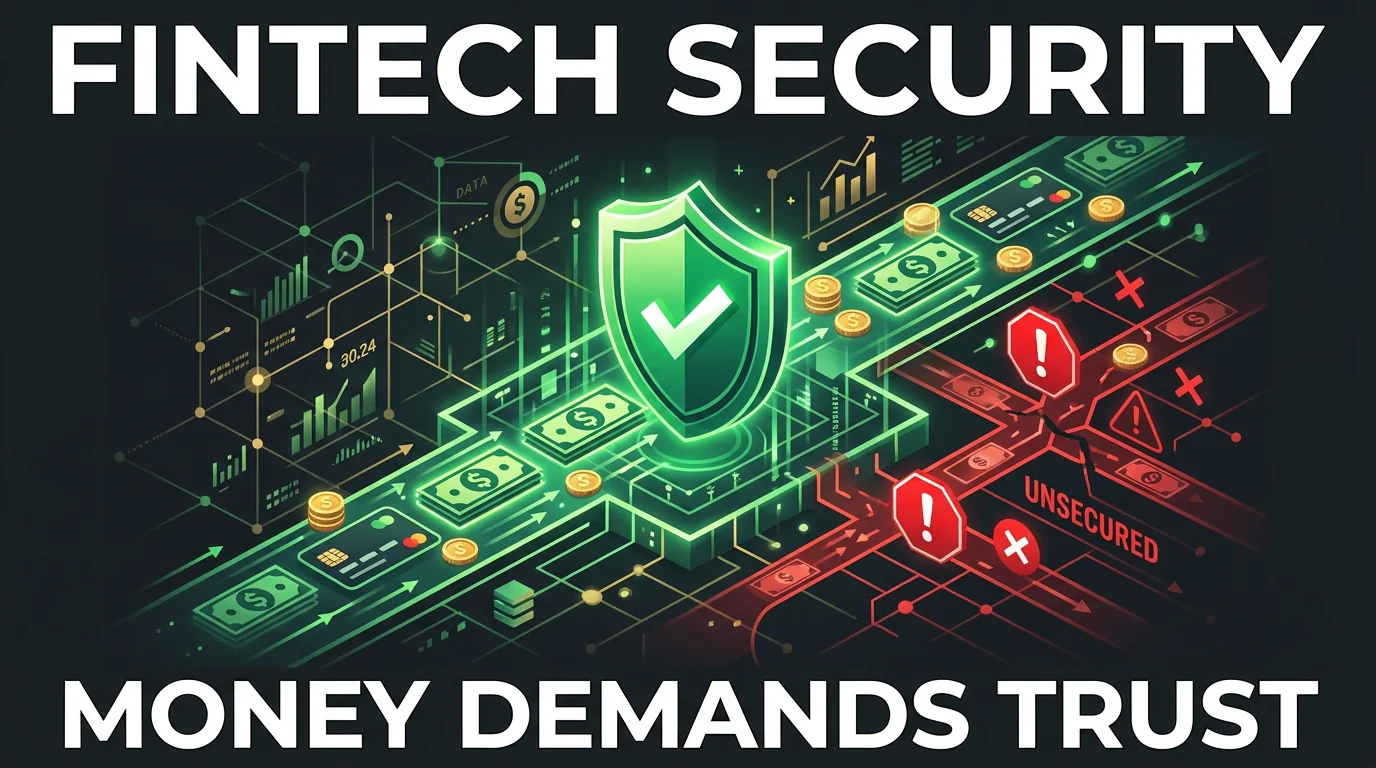
FinTech occupies unique territory in software development. When your application handles money, the stakes change. A bug that loses data is annoying. A bug that loses money is a crisis. A security breach in a social app is embarrassing. In FinTech, it’s potentially criminal.
This changes everything about how you build, test, and deploy. Here’s what FinTech founders need to understand about building financial software.
What Makes FinTech Different
| Aspect | Standard Software | FinTech |
|---|---|---|
| Failure cost | User frustration | Financial loss, legal liability |
| Regulatory burden | Optional compliance | Required compliance (PCI DSS, SOC 2) |
| Security standard | Good practice | Bank-grade security |
| Testing rigor | High coverage | Edge case obsession |
| Data integrity | Eventually consistent | ACID transactions required |
PCI DSS Compliance
Payment Card Industry Data Security Standard applies if you process, store, or transmit credit card data. Even if you use a payment processor like Stripe, certain obligations remain.
PCI DSS Requirements
| Requirement | What It Means |
|---|---|
| Network security | Firewalls, access controls |
| Default passwords | Must be changed from vendor defaults |
| Stored data protection | Encryption of cardholder data |
| Encryption in transit | TLS for all data transmission |
| Antivirus software | Regular updates and scans |
| Secure systems | Patches, vulnerabilities addressed |
| Access restriction | Need-to-know access only |
| Unique IDs | Individual user identification |
| Physical access | Control physical access to systems |
| Access logs | Track all access to network resources |
| Security testing | Regular penetration testing |
| Information security policy | Documented security policies |
Using Payment Processors
Most FinTech startups use Stripe, Braintree, or similar processors to handle PCI DSS scope. This is smart, but doesn’t eliminate all compliance requirements:
| Processor Handles | You Still Handle |
|---|---|
| Card data storage | Customer PII |
| Transaction processing | Audit trails |
| PCI compliance for card data | Access controls for your systems |
| Fraud detection | User authentication security |
Financial Data Integrity
The Ledger Pattern
Financial systems typically use double-entry bookkeeping principles at the database level:
// Every financial transaction should be atomic and create matching entries
interface Transaction {
  id: string;
  type: 'credit' | 'debit';
  amount: number; // Use integers for money! (cents, not dollars)
  accountId: string;
  reference: string;
  createdAt: Date;
}

// Every transfer should be a single atomic operation
async function transfer(
  fromAccount: string,
  toAccount: string,
  amount: number,
  reference: string
): Promise<Transaction[]> {
  return db.transaction(async (tx) => {
    // Create debit
    const debit = await tx.insert(
      'INSERT INTO transactions (type, amount, account_id, reference) VALUES ($1, $2, $3, $4)',
      ['debit', -amount, fromAccount, reference]
    );

    // Create credit
    const credit = await tx.insert(
      'INSERT INTO transactions (type, amount, account_id, reference) VALUES ($1, $2, $3, $4)',
      ['credit', amount, toAccount, reference]
    );

    return [debit, credit];
  });
}
Money Handling Rules
| Rule | Why It Matters | Implementation |
|---|---|---|
| Use integers | Floating point errors cause money to appear/disappear | Store cents as integers |
| Atomic transactions | Partial failures create inconsistent state | Database transactions for all money operations |
| Idempotency | Retries should be safe | Include idempotency keys in transaction records |
| Audit trails | Every money movement must trace | Never delete transaction records |
| Immutable ledger | History should be preserved | Append-only transaction tables |
Handling Concurrency
Financial systems face concurrency challenges that other applications don’t:
| Scenario | Standard Approach | FinTech Approach |
|---|---|---|
| Two users access same account | Last write wins | Pessimistic locking or serializable transactions |
| High transaction volume | Queue for processing | Partitioned processing with strict ordering |
| Long-running transactions | Timeout and retry | Careful transaction design to minimize duration |
Security Considerations
Authentication Requirements
| Requirement | Standard App | FinTech App |
|---|---|---|
| MFA | Optional | Required |
| Password complexity | Basic rules | Strong requirements, breach detection |
| Session management | Standard JWT | Short-lived tokens, refresh mechanism |
| Device trust | Nice to have | Risk-based authentication |
| Account lockout | Optional | Configurable, graduated response |
Data Protection
| Data Type | Protection Level | Reason |
|---|---|---|
| Passwords | Strong hash (bcrypt, argon2) | Prevent credential exposure |
| PII (name, email) | Encryption at rest | Compliance requirements |
| Financial data | Encryption + access controls | Regulatory requirements |
| API keys | Hashed or encrypted | Prevent unauthorized access |
| Session tokens | Short expiration, secure storage | Prevent session hijacking |
Audit Logging
| What to Log | Retention | Reason |
|---|---|---|
| Authentication events | 7 years | Compliance, security |
| Authorization changes | 7 years | Compliance, security |
| Transaction access | 7 years | Financial auditing |
| Data modifications | 7 years | Data integrity |
| Administrative actions | 7 years | Compliance |
Testing FinTech Applications
Beyond Unit Tests
| Test Type | What It Covers | Why It Matters |
|---|---|---|
| Property-based testing | Money invariants | Catch logic errors in financial code |
| Concurrency testing | Race conditions | Find bugs that only appear under load |
| Reconciliation testing | System state verification | Ensure balances always match |
| Failure injection | Error handling | Test graceful degradation |
| Security testing | Vulnerabilities | Find security weaknesses before attackers |
Reconciliation Pattern
// Daily reconciliation job to verify system integrity
async function reconcileAccounts(): Promise<ReconciliationResult> {
  const accounts = await db.query('SELECT id, balance FROM accounts');
  const transactions = await db.query('SELECT account_id, SUM(CASE WHEN type = $1 THEN amount ELSE -amount END) as balance FROM transactions GROUP BY account_id');

  const discrepancies: Discrepancy[] = [];

  for (const account of accounts) {
    const calculatedBalance = transactions.find(t => t.account_id === account.id)?.balance || 0;
    if (account.balance !== calculatedBalance) {
      discrepancies.push({
        accountId: account.id,
        expected: calculatedBalance,
        actual: account.balance,
      });
    }
  }

  return { discrepancies };
}
Common Mistakes
| Mistake | Consequence | Prevention |
|---|---|---|
| Storing money as floats | Rounding errors, lost money | Use integers (cents) |
| Non-atomic transactions | Inconsistent state after failures | Always use database transactions |
| Soft delete financial records | Audit trail broken | Append-only, never delete |
| Skipping MFA | Account compromise | Require MFA from day one |
| Insufficient audit logging | Compliance failures | Log every financial action |
| Ignoring concurrency | Race conditions, lost money | Design for concurrent access from start |
FinTech development requires more rigor than typical software. The stakes are higher and the margin for error is smaller. If you’re building a financial application and need guidance on security, compliance, and architecture, book a consultation. We’ll help you navigate these requirements while building a secure, reliable financial system.