Lifting and Shifting to the Cloud: When It Actually Makes Sense
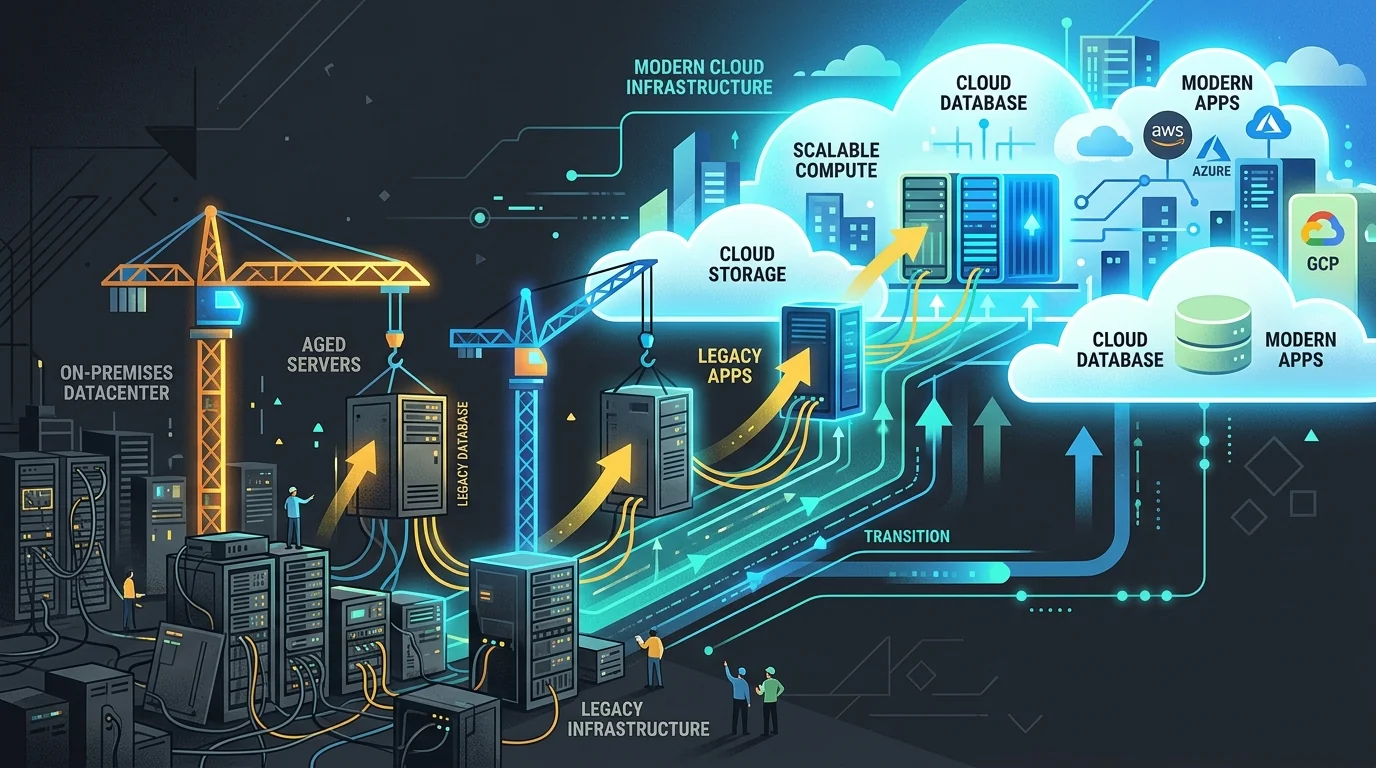
Lift-and-shift is not lazy by default. In the right situation it buys time, reduces migration risk, and gets you out of fragile infrastructure faster.
Jason Overmier
Innovative Prospects Team
Lift-and-shift has a bad reputation because too many teams use it as a substitute for architecture work. That criticism is fair. It is also incomplete.
Sometimes the fastest way to reduce operational risk is to move an application to cloud infrastructure first, stabilize it, and refactor later. If your data center is brittle, your hardware is aging, or your deployment process is one person with shell access, lift-and-shift can be the responsible move.
Quick Decision Guide
| Situation | Lift-and-shift first? | Why |
|---|---|---|
| Hardware refresh is urgent | Yes | You need to remove infrastructure risk quickly |
| App is stable but ops are fragile | Yes | Infrastructure change gives leverage without changing business logic |
| App needs major architectural change now | No | You will pay the migration cost twice |
| Licensing depends on current environment | Maybe | Validate vendor and compliance constraints first |
| Team has limited cloud experience | Maybe | Start small and avoid premature redesign |
When It Works Well
Lift-and-shift is strongest when the application is not the main problem.
That usually looks like this:
- The software works, but deployments are manual and risky.
- The team needs better backup, monitoring, and disaster recovery.
- Infrastructure contracts or hardware lifecycles are forcing a change.
- You need time to learn the real bottlenecks before redesigning anything.
In those cases, moving the app first can buy the breathing room needed for a smarter second phase.
When It Becomes Expensive
The failure mode is easy to spot: a team migrates a bad system into a more expensive environment and calls it modernization.
Lift-and-shift becomes the wrong move when:
- The application already has major scaling limits.
- You are carrying heavy licensing costs tied to old architecture.
- The data model needs redesign anyway.
- The app depends on low-latency local systems that will not survive the move.
- The business expects cloud migration to automatically improve developer velocity.
Cloud does not fix coupling, poor test coverage, or unclear ownership.
A Safer Migration Sequence
Use lift-and-shift as phase one, not the whole strategy.
| Phase | Goal |
|---|---|
| 1. Inventory | Map servers, storage, integrations, and operational dependencies |
| 2. Stabilize | Add backups, logging, monitoring, and rollback procedures |
| 3. Migrate | Rehost the application with minimal code changes |
| 4. Observe | Measure cost, latency, incident rate, and deployment friction |
| 5. Refactor | Move the worst bottlenecks to managed services or new components |
This sequence keeps teams from redesigning blindly.
What to Measure After the Move
If the move was worth it, you should see improvement in operational metrics before you see improvement in feature velocity.
Track:
- Recovery time after incidents
- Backup success rate
- Deployment frequency
- Infrastructure change lead time
- Monthly cloud cost by environment
- Time spent on patching and server maintenance
If those numbers do not improve, the migration is probably just a hosting change with extra invoices.
Common Pitfalls
| Pitfall | Why It Happens | Fix |
|---|---|---|
| Overprovisioned cloud spend | Teams size for peak load and never revisit it | Right-size after 30 days of real metrics |
| Broken integrations | Hidden network assumptions surface late | Inventory dependencies before cutover |
| Security gaps | Old trust model gets copied into cloud | Rework IAM, secrets, and network boundaries |
| No rollback plan | Teams treat migration as one-way | Define cutback steps before the move |
Our Rule of Thumb
Lift-and-shift makes sense when the business needs risk reduction faster than it needs architectural elegance.
If the application is operationally fragile but functionally acceptable, move it first. If the application itself is the problem, redesign first.
Need help planning a cloud migration without overcommitting to a rewrite? Talk with our team. We help teams separate infrastructure urgency from architecture decisions so they can modernize in the right order.