Logistics Software: Real-Time Tracking and Route Optimization
Logistics platforms require real-time visibility, route optimization, and seamless coordination. Here's what it takes to build logistics software that can compete with legacy solutions.
Jason Overmier
Innovative Prospects Team
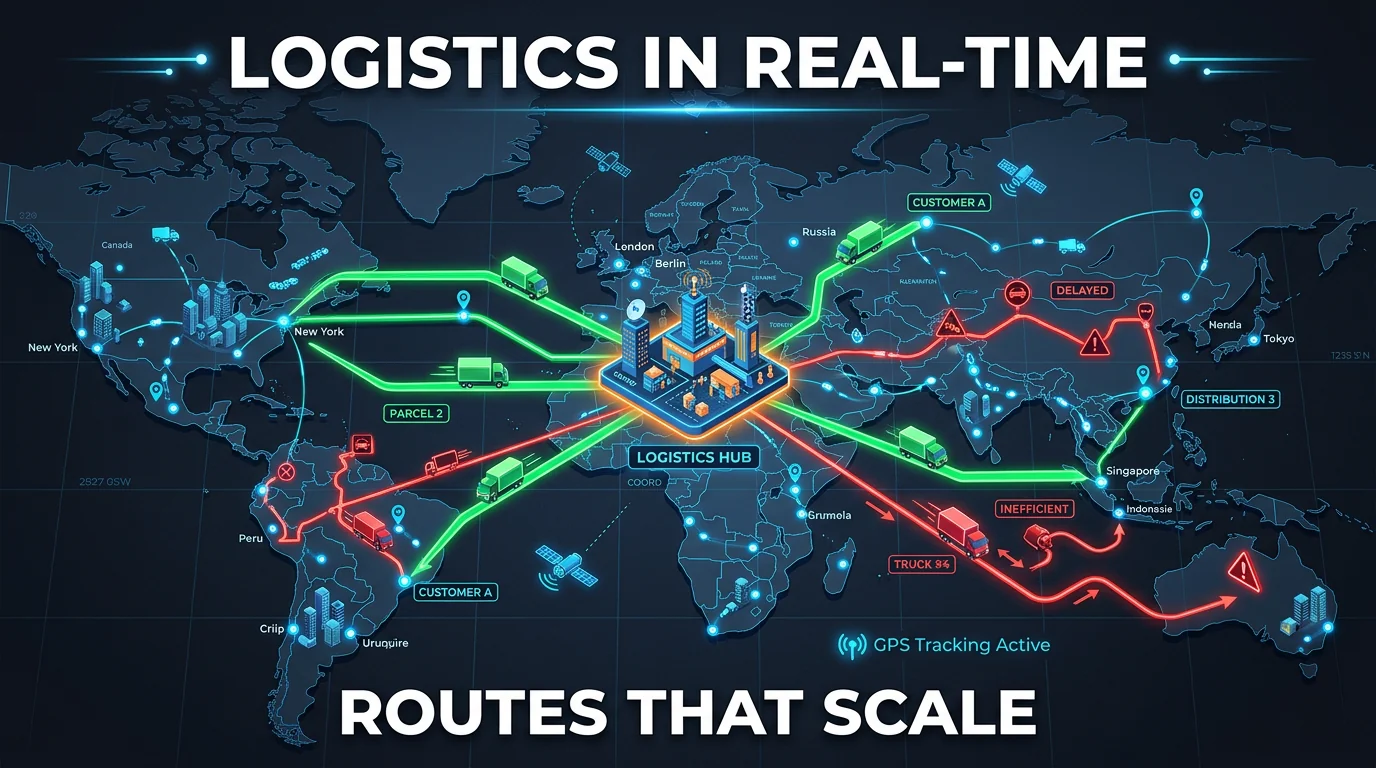
Logistics software operates at the intersection of real-time data processing, optimization algorithms, and operational coordination. The challenge isn’t just tracking shipments. it’s making the entire logistics chain visible and efficient.
Core Challenges
| Challenge | Legacy Approach | Modern Solution |
|---|---|---|
| Real-time tracking | Phone calls, manual updates | GPS integration, live dashboards |
| Route planning | Static routes, experienced drivers | Dynamic optimization algorithms |
| Fleet coordination | Radio dispatch | Centralized dispatch, mobile apps |
| Customer visibility | ”Where’s my shipment?” calls | Customer portal, push notifications |
| Capacity planning | Guesswork | Predictive analytics |
Real-Time Tracking Architecture
GPS Data Ingestion
interface GPSReading {
  vehicleId: string;
  latitude: number;
  longitude: number;
  speed: number;
  heading: number;
  timestamp: Date;
}

// GPS devices transmit every 1-30 seconds
// High volume: can be 10K+ vehicles transmitting simultaneously
Processing Pipeline
GPS Device → Message Queue → Stream Processor → Database → Real-time Dashboard
                      ↓
Analytics Pipeline (batch)| Component | Technology Options |
|---|---|
| Message Queue | Kafka, RabbitMQ, AWS Kinesis |
| Stream Processor | Flink, Spark Streaming, Kafka Streams |
| Database | TimescaleDB, DynamoDB, Redis (hot data) |
| Dashboard | Custom, Tableau, Grafana |
Route Optimization
Route optimization reduces fuel costs, improves delivery times, and increases driver satisfaction.
The Problem
Given:
- Current vehicle location
- Current load weight
- Delivery destination
- Traffic conditions
- Driver hours regulations
Find: Optimal route that minimizes total cost (time + fuel + driver wages)
Algorithms
| Algorithm | Best For | Trade-offs |
|---|---|---|
| Dijkstra | Single vehicle, shortest path | Doesn’t account real-time traffic |
| A* | Multiple vehicles, multiple destinations | Computationally expensive |
| Contraction Hierarchies | Large networks | Requires preprocessing |
| Machine Learning | Complex constraints | Requires training data, ongoing maintenance |
| Constraint Programming | Complex business rules | Can be slow for real-time |
Practical Approach
Most logistics platforms use a hybrid approach:
- Pre-computed base routes for common corridors
- Real-time optimization for exceptions
- Human override for complex situations
Fleet Management Features
Vehicle Tracking
| Feature | Purpose |
|---|---|
| Live location | Real-time visibility |
| Speed monitoring | Safety, ETA calculation |
| Geofencing | Alert when leaving route |
| Idle detection | Utilization tracking |
Driver Coordination
| Feature | Purpose |
|---|---|
| Task assignment | Match loads to available drivers |
| Mobile app | Driver communication, navigation |
| Proof of delivery | Confirmation, photos, signatures |
| Hours logging | Compliance, payroll |
Customer Communication
| Feature | Purpose |
|---|---|
| Tracking page | Self-service visibility |
| SMS/Email notifications | Proactive updates |
| Delivery windows | Manage expectations |
| Feedback collection | Quality assurance |
Scaling Considerations
Peak Events
Logistics platforms must handle dramatic traffic spikes:
| Event | Traffic Increase | Preparation |
|---|---|---|
| Holiday season | 2-5x normal | Pre-scale infrastructure |
| Flash sales | Unpredictable | Auto-scaling message queues |
| Weather events | Route complexity | Fallback algorithms |
Data Volume
| Data Type | Volume (per 1000 vehicles) |
|---|---|
| GPS readings | 1-3 GB/day |
| Events | 500 MB/day |
| Analytics | 100 MB/day |
Common Pitfalls
| Pitfall | Symptom | Fix |
|---|---|---|
| Over-engineering routing | Optimization takes longer than route | Use pre-computed routes for 80% of cases |
| GPS lag | Tracking dots jump erratically | Use interpolation and dead reckoning |
| Dashboard overload | Too much data, no action items | Focus on exception-based alerts |
| Ignoring offline | Data gaps during connectivity loss | Queue data locally, sync when connected |
| Scaling too early | Expensive infrastructure before needed | Start simple, scale when needed |
Building logistics software requires balancing real-time needs with operational reality. If you’re building a logistics platform and need guidance on architecture and algorithms, book a consultation. We’ll help you design a system that delivers on real-world logistics challenges.