Manufacturing IoT Integration: Quality Control and Inventory Systems
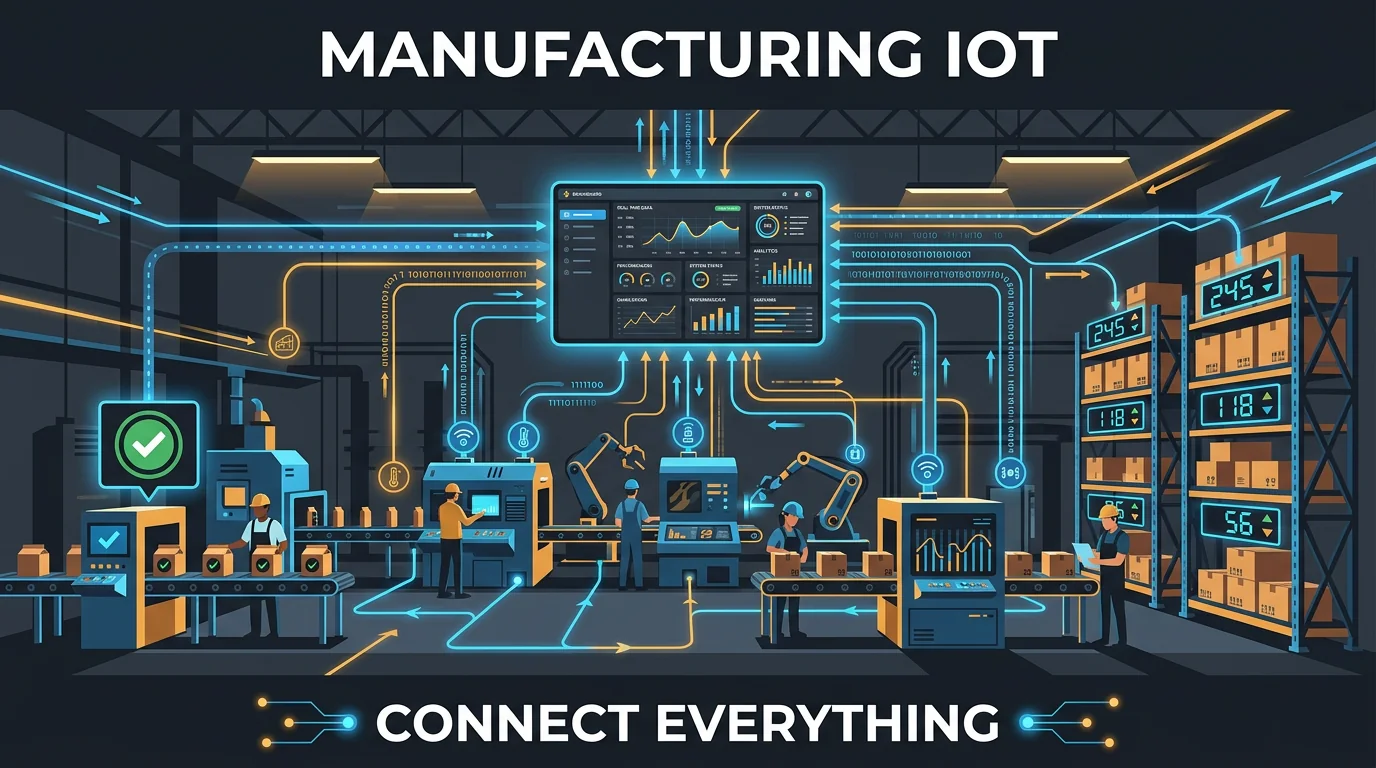
Connecting manufacturing systems requires more than sensors and it's about data ingestion, quality dashboards, and inventory synchronization. Here's what it takes to build manufacturing IoT solutions.
Jason Overmier
Innovative Prospects Team
Manufacturing floors generate enormous amounts of data. Temperature readings, cycle counts, quality measurements, inventory levels. The challenge isn’t collecting this data. It’s using it to improve quality, reduce waste, and optimize inventory.
The IoT Opportunity
| Metric | Traditional Manufacturing | IoT-Enabled Manufacturing |
|---|---|---|
| Data collection | Manual, periodic | Continuous, automated |
| Response time | Hours to days | Seconds to minutes |
| Quality detection | End-of-line inspection | Real-time monitoring |
| Inventory accuracy | Periodic counts | Real-time tracking |
| Predictive capability | Limited | Data-driven forecasting |
Core Use Cases
Quality Control
Problem: Defects detected too late, resulting in scrap and rework.
IoT Solution:
| Sensor | Measurement | Alert Trigger |
|---|---|---|
| Vibration | Excessive vibration indicating wear | Schedule maintenance before failure |
| Temperature | Overheating components | Reduce speed, alert operator |
| Vision | Visual defect detection | Stop line, flag inspection |
| Dimension | Out-of-tolerance parts | Adjust machine, reject part |
Architecture:
Machine Sensors → Edge Device → MQTT → Stream Processing → Dashboard
                                    ↓
                                Time-series Database (historical)
Inventory Management
Problem: Inventory counts are inaccurate, causing stockouts or overstocking.
IoT Solution:
| Technology | Application |
|---|---|
| RFID tags | Automatic identification |
| Weight sensors | Bulk inventory tracking |
| Barcode scanners | WIP tracking |
| Gate readers | Location tracking |
Data Flow:
Tag Read → Location Update → Database → Dashboard
                            ↓
                          ERP Integration (reorder trigger)
Predictive Maintenance
Problem: Machines fail unexpectedly, causing unplanned downtime.
IoT Solution:
| Data Collected | Analysis Purpose |
|---|---|
| Vibration patterns | Detect bearing wear |
| Temperature trends | Predict overheating |
| Current draw | Motor degradation |
| Oil analysis | Lubricant breakdown |
Prediction Pipeline:
Sensor Data → Feature Extraction → ML Model → Prediction → Alert
                                                    ↓
                  Maintenance Scheduling Integration
Technical Architecture
Edge Computing vs Cloud Computing
| Processing Location | Latency | Bandwidth | Cost | Complexity |
|---|---|---|---|---|
| On-premise (edge) | <10ms | Low | High | High |
| On-premise (server) | <100ms | Medium | Medium | Medium |
| Cloud | 100ms+ | High | Low | Low |
| Hybrid | Mixed | Mixed | Balanced | Higher |
Recommended Architecture
For most manufacturing IoT:
Sensors → Edge Gateway → Local Dashboard (real-time)
                    ↓
                  Message Queue (Cloud)
                    ↓
                  Analytics Pipeline (Cloud)
                    ↓
                  ERP Integration
Protocol Selection
| Protocol | Best For | Trade-offs |
|---|---|---|
| MQTT | IoT messaging, lightweight | Requires broker |
| OPC UA | Industrial automation, more features | Heavier, complex |
| AMqp | Enterprise messaging | Advanced que queing |
| HTTP/REST | Simple integration | Stateless |
Common Pitfalls
| Pitfall | Consequence | Prevention |
|---|---|---|
| Over-collecting data | Analysis paralysis | Start with clear questions |
| Ignoring security | Vulnerable OT devices | Network isolation, encryption |
| Underestimating volume | System collapse | Load testing with realistic data |
| Poor change management | Failed firmware updates | OTA update strategy |
| No offline capability | Production halt when connectivity lost | Edge processing and buffering |
Manufacturing IoT requires understanding both operational technology and data engineering. If you’re building a manufacturing IoT solution, need guidance on architecture and sensors, and integration, book a consultation. We’ll help you design a system that delivers real manufacturing value.