Modernizing a 10-Year-Old SaaS Platform Without Breaking the Business
Older SaaS platforms rarely fail all at once. They fail by accumulating enough friction that every release, incident, and customer request gets more expensive than the last.
Jason Overmier
Innovative Prospects Team
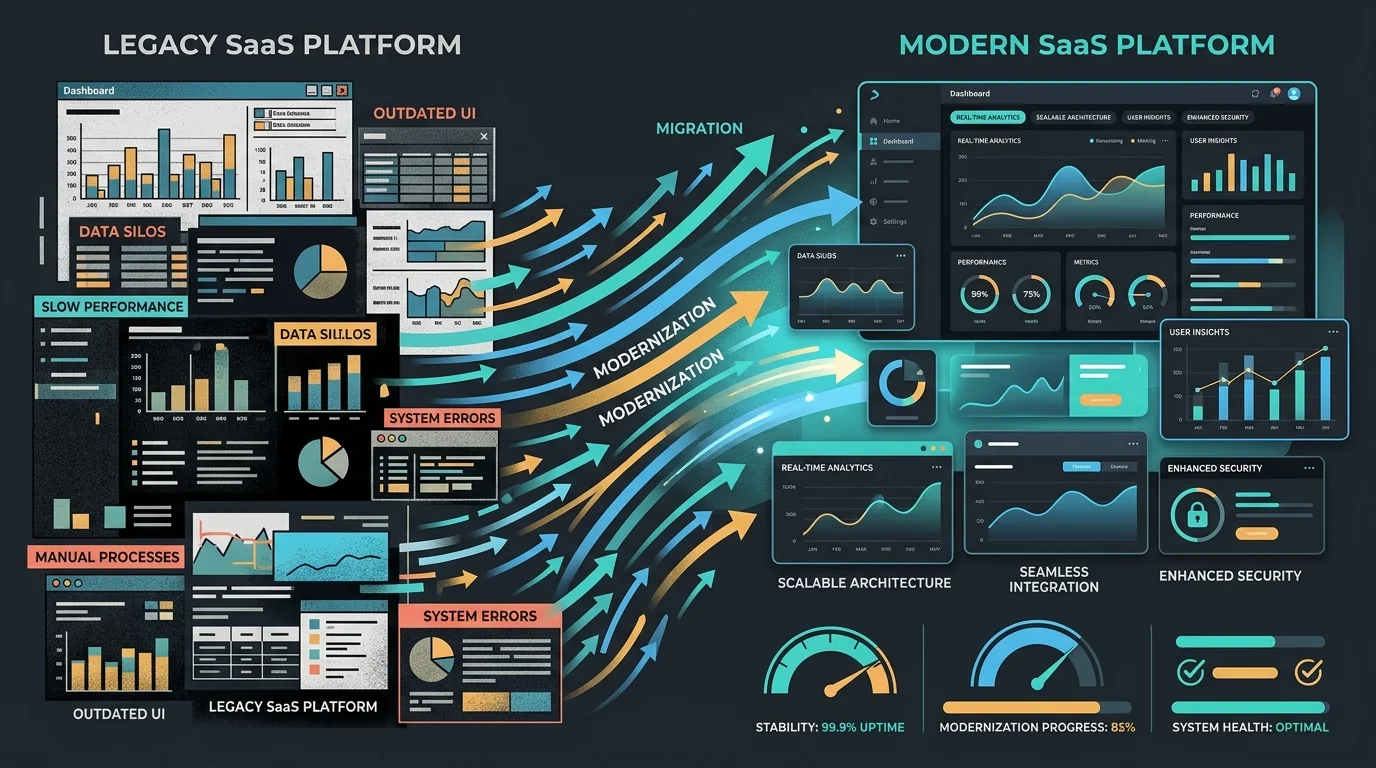
By year ten, most SaaS platforms are carrying at least three different generations of product decisions at the same time. Early shortcuts are still in production. Infrastructure reflects old traffic patterns. Reporting logic has been patched repeatedly. The team knows the system works, but nobody would design it this way today.
That does not mean you need a heroic rewrite. It means you need a modernization plan that protects revenue while reducing future change cost.
What Usually Breaks First
| Area | Typical Symptom |
|---|---|
| Deployments | Releases require hand-holding or after-hours work |
| Data model | Reporting and product changes create schema pain |
| Permissions | Auth rules are scattered and hard to reason about |
| Integrations | Every external dependency has special handling |
| Support tooling | Internal admin paths are brittle or incomplete |
Those are usually better modernization targets than whatever engineers find most annoying in the code editor.
A Business-Safe Sequence
1. Stabilize the operating surface
Before changing architecture, improve:
- Monitoring and alerting
- Backups and restore drills
- Deployment repeatability
- Incident ownership
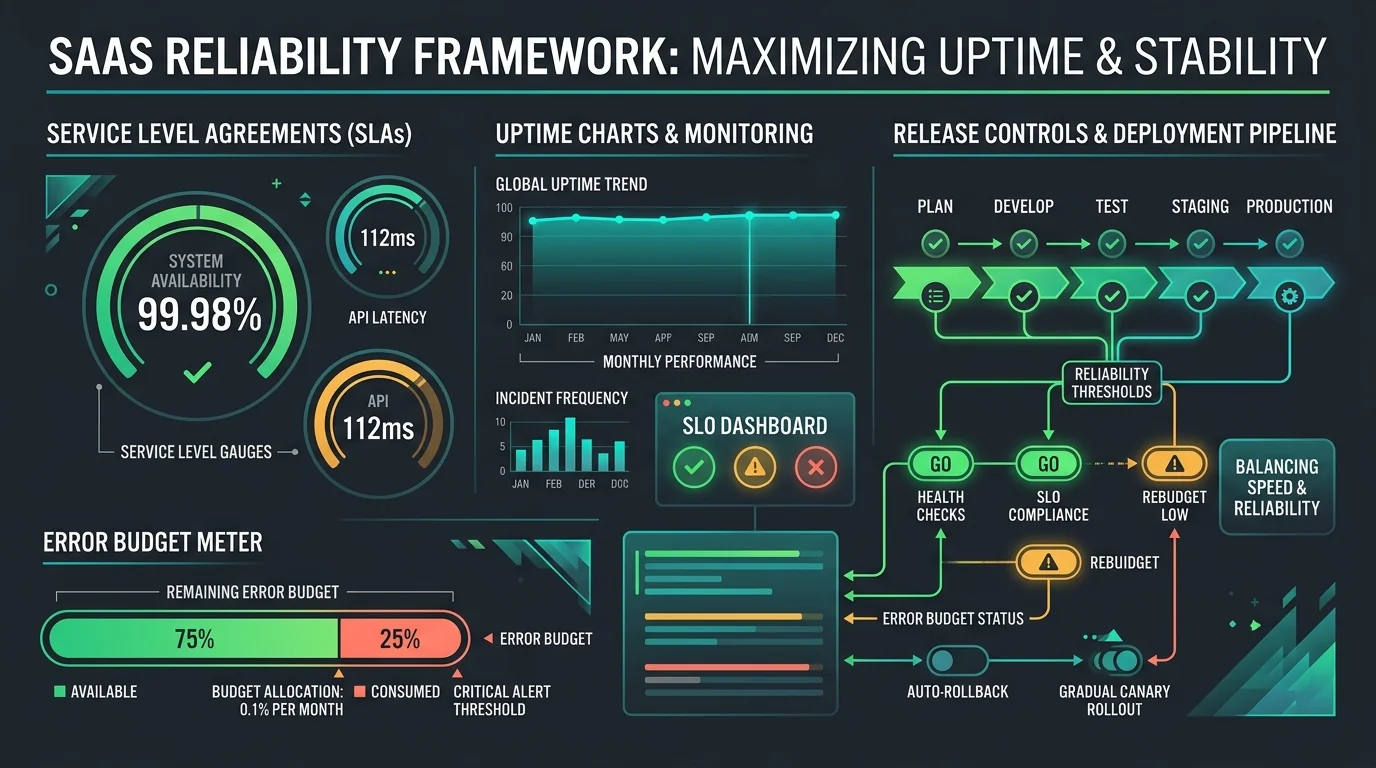
This reduces the chance that the modernization work itself creates chaos.
2. Map revenue-critical flows
Document the paths that directly affect:
- Billing
- User sign-up and onboarding
- Core product workflows
- Data exports and integrations
Those flows deserve the strongest regression protection before you touch them.
3. Pull out the worst choke points
Good candidates:
- Reporting jobs that overload the main database
- File-processing or import pipelines
- Notification systems
- Admin tools with fragile permission logic
These often deliver high leverage without forcing a full platform rewrite.
The Capability Gap to Watch
Aging SaaS products often have a hidden mismatch:
| Business expectation | Platform reality |
|---|---|
| Faster enterprise deals | Permission model built for one role set |
| Better reporting | Data model optimized only for transactions |
| More integrations | Internal APIs were never designed as contracts |
| Faster roadmap delivery | Every release requires manual coordination |
Modernization should close those gaps. If it does not, it is just technical housekeeping.
Common Pitfalls
| Pitfall | Why It Happens | Fix |
|---|---|---|
| Team modernizes what is familiar | Engineers pick problems they understand best | Prioritize by business leverage |
| Support team is excluded | Architecture work feels internal | Pull support pain into the roadmap |
| Old and new systems drift | Transitional state lasts too long | Define retirement milestones early |
| Platform gets cleaner but not safer | Reliability work was deferred | Pair modernization with operational hardening |
A More Honest Goal
The goal is not “make the platform modern.” The goal is:
- safer releases
- lower change cost
- fewer recurring incidents
- clearer ownership
- room to grow without constant fear
That is what leadership actually buys when they fund modernization.
If your SaaS platform still works but feels more expensive every quarter, reach out. We help teams modernize in stages without gambling the business on a rewrite.