Building for FinTech: PCI DSS and SOC 2 Compliance Guide
Building financial technology? Here's what founders need to know about PCI DSS and SOC 2 compliance without drowning in regulatory requirements.
Jason Overmier
Innovative Prospects Team
Building for FinTech: PCI DSS and SOC 2 Compliance Guide
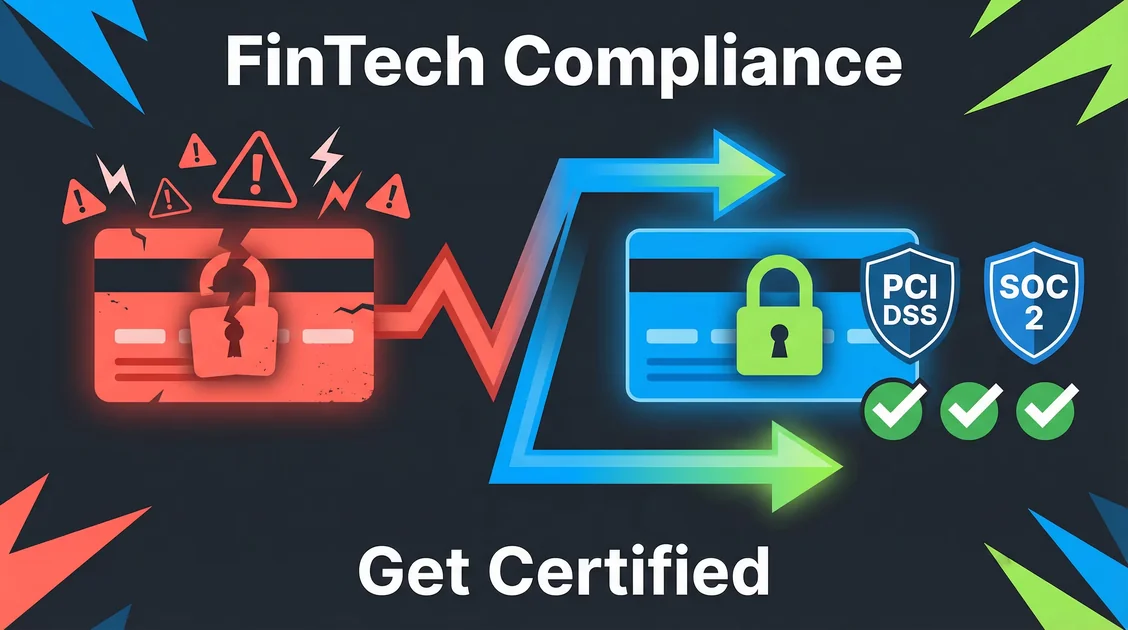
Building financial technology means navigating a maze of compliance requirements. Two acronyms dominate the conversation: PCI DSS (for payment card security) and SOC 2 (for overall security practices).
These frameworks feel overwhelming, but they’re not insurmountable. Understanding what’s actually required helps you build compliant systems without drowning in paperwork or blowing your budget.
Quick Answer: What You Actually Need
PCI DSS applies if you handle, process, or transmit credit card data. Even if you use a payment processor like Stripe, some requirements still apply.
SOC 2 is often required by enterprise customers and investors to demonstrate you have proper security controls in place.
The good news: using modern payment processors (Stripe, Braintree, Adyen) significantly reduces your PCI burden. And SOC 2 compliance is achievable with the right approach and tools.
PCI DSS: The Payment Card Industry Data Security Standard
What is PCI DSS?
PCI DSS is a set of security standards designed to ensure that all companies that accept, process, store, or transmit credit card information maintain a secure environment. It’s enforced by the major card brands (Visa, Mastercard, Amex, Discover).
Who needs to comply? Anyone who handles payment card data, even indirectly.
The 4 Merchant Levels
| Level | Criteria | Validation Requirements |
|---|---|---|
| Level 1 | 6M+ transactions/year | Annual on-site audit, quarterly network scan |
| Level 2 | 1M-6M transactions/year | Annual self-assessment, quarterly network scan |
| Level 3 | 20K-1M e-commerce transactions/year | Annual self-assessment, quarterly network scan |
| Level 4 | <20K e-commerce transactions/year | Annual self-assessment, recommended quarterly scan |
Most startups begin at Level 4 and move up as they scale.
The 12 PCI Requirements (Simplified)
PCI DSS has 12 detailed requirements, but they cluster into 6 logical groups:
| Requirement Group | What It Means |
|---|---|
| Secure Network | Firewalls, secure network configurations |
| Data Protection | Encryption of cardholder data (at rest and in transit) |
| Vulnerability Management | Regular security updates, malware protection |
| Access Control | Unique IDs, need-to-know access, physical access controls |
| Monitoring & Testing | Logging, monitoring, vulnerability scanning |
| Information Security | Policy, training, incident response |
The Critical Decision: Touch Card Data or Not?
Your PCI compliance burden depends entirely on whether your systems touch cardholder data.
Option A: Never Touch Card Data (Recommended)
Use a hosted payment page where the user enters card details directly on the processor’s servers.
| Provider | PCI Burden | Your Responsibility |
|---|---|---|
| Stripe Checkout | Lowest | Minimal compliance (SAQ A) |
| Stripe Elements | Low-Moderate | SAQ A-VP |
| Braintree Hosted Fields | Low-Moderate | SAQ A-VP |
| Custom implementation | High | Full PCI audit (SAQ D) |
Option B: Touch Card Data (Not Recommended for MVPs)
Your servers see raw card data. This requires significantly more compliance work and higher security standards.
Recommendation: Start with hosted payment pages. Only consider touching card data if you have a compelling business reason and the resources for full compliance.
PCI SAQs: Which One Applies?
The Self-Assessment Questionnaire (SAQ) you complete depends on how you handle payments.
| SAQ Type | When It Applies | Complexity |
|---|---|---|
| SAQ A | Cardholder data never touches your systems (e.g., PayPal) | Lowest |
| SAQ A-EP | E-commerce, outsourced payment page but some control | Low |
| SAQ B | Face-to-face terminals only | Low |
| SAQ B-IP | Face-to-face terminals with internet connectivity | Low-Medium |
| SAQ C-VT | Telephone or e-commerce channels with manual processes | Medium |
| SAQ C | E-commerce with payment application | Medium-High |
| SAQ D | All other merchants, including those who touch card data | Highest |
For most SaaS companies: You’ll likely use SAQ A or SAQ A-EP if you use Stripe or Braintree properly.
SOC 2: Service Organization Control 2
What is SOC 2?
SOC 2 is an auditing framework that demonstrates your service organization has appropriate controls in place to secure customer data. Unlike PCI DSS, SOC 2 isn’t legally required. It’s often demanded by enterprise customers and investors.
The five SOC 2 Trust Services Criteria:
| Criterion | What It Covers |
|---|---|
| Security | Protection against unauthorized access |
| Availability | System uptime and performance |
| Processing Integrity | Complete, accurate, and timely processing |
| Confidentiality | Protection of confidential information |
| Privacy | Collection, use, and disclosure of personal information |
Type 1 vs. Type 2:
| Report Type | What It Covers | Audit Period |
|---|---|---|
| Type 1 | Controls designed and in place at a point in time | Single date |
| Type 2 | Controls operating effectively over time | 3-12 months |
Type 2 is the gold standard and what most enterprises require.
When Do You Need SOC 2?
| Trigger | SOC 2 Required? |
|---|---|
| Selling to enterprise B2B customers | Usually yes |
| Handling sensitive customer data | Usually yes |
| Series A+ fundraising | Commonly requested |
| Early-stage B2B SaaS | Sometimes |
| B2C products | Rarely |
Timeline: SOC 2 Type 2 typically takes 6-12 months from start to report.
Building Compliant FinTech: Architecture Patterns
Payment Architecture (PCI DSS)
Recommended: Tokenization
Customer → Your Frontend → Stripe/Braintree (Card Data)
                ↓
            Token/Reference ID
                ↓
            Your Backend → Stripe/Braintree API → Charge
Key principles:
- Never store card data: use tokens from your payment processor
- Your servers only ever see tokens: never raw card numbers
- Use 3D Secure for fraud prevention on high-value transactions
- Implement webhook verification: confirm payment processor webhooks are legitimate
Example: Stripe Integration Pattern
import Stripe from 'stripe';

const stripe = new Stripe(process.env.STRIPE_SECRET_KEY);

// Client-side: Stripe Elements creates a payment method
// and sends it to your backend

async function createPaymentIntent(amount: number, currency: string) {
  // Your server NEVER sees card data
  // Only receives paymentMethodId from client

  const paymentIntent = await stripe.paymentIntents.create({
    amount,
    currency,
    automatic_payment_methods: {
      enabled: true,
    },
  });

  return paymentIntent.client_secret;
}

// Webhook handler: verify signature
async function handleWebhook(signature: string, payload: Buffer) {
  const event = stripe.webhooks.constructEvent(
    payload,
    signature,
    process.env.STRIPE_WEBHOOK_SECRET
  );

  // Handle the event
  switch (event.type) {
    case 'payment_intent.succeeded':
      // Update your database, fulfill order, etc.
      break;
  }
}
Security Architecture (SOC 2)
Core security controls:
| Control | Implementation |
|---|---|
| Access Control | SSO (SAML/OIDC), RBAC, just-in-time access |
| Encryption | TLS 1.3, AES-256 encryption at rest |
| Logging | Centralized logging (Datadog, CloudWatch) with tamper-evident storage |
| Monitoring | Uptime monitoring, alerting, anomaly detection |
| Backup | Encrypted backups, tested restoration |
| Change Management | Code review, CI/CD, staged deployments |
| Incident Response | Documented procedures, escalation paths |
Compliance-Friendly Technology Choices
Payment Processors with PCI Benefits
| Processor | PCI Advantage | Best For |
|---|---|---|
| Stripe | Excellent documentation, SAQ A eligible, SOC 2 certified | Most SaaS, marketplaces |
| Braintree | SAQ A-VP eligible, PayPal ecosystem | E-commerce, PayPal-heavy users |
| Adyen | Global coverage, enterprise features | International expansion |
| Paddle | Merchant of Record (they handle PCI) | B2B SaaS (simplifies compliance) |
Note: “Merchant of Record” models like Paddle or Lemon Squeezy can dramatically simplify compliance because they become the seller, not you.
Security & Compliance Tools
| Tool Category | Options | Purpose |
|---|---|---|
| SSO/Identity | Auth0, Okta, WorkOS | Centralized access control |
| Logging | Datadog, CloudWatch, New Relic | Audit trail requirements |
| Security Scanning | Snyk, Dependabot | Vulnerability management |
| Compliance Platforms | Vanta, Drata, Secureframe | Automate SOC 2 preparation |
| Secrets Management | 1Password, HashiCorp Vault | Secure credential storage |
Common FinTech Compliance Mistakes
| Mistake | Why It Happens | How to Avoid |
|---|---|---|
| Storing card data | Teams want to “save cards for future use” | Use processor tokenization, never store PANs |
| Assuming Stripe makes you PCI compliant | Misunderstanding of shared responsibility | You still have PCI requirements even with Stripe |
| Logging sensitive data | Debug logging captures request bodies | Sanitize logs, never log card data or tokens |
| No incident response plan | Teams focus on building, not operations | Document response procedures before you need them |
| Ignoring change management | Deploying directly to production | Implement code review, staged environments |
| Weak access controls | Shared credentials, no MFA | Use SSO, individual accounts, MFA everywhere |
| No background checks | Hiring without verification | Screen employees with system access |
| Missing SOC 2 documentation | Doing the right thing, not documenting it | Start documentation early, use compliance platforms |
Minimum Viable Compliance Roadmap
Phase 1: Foundation (Months 1-3)
PCI DSS:
- Choose hosted payment flow (Stripe Checkout or Elements)
- Complete SAQ A or SAQ A-VP
- Implement TLS encryption
- Enable logging for payment flows
- Review quarterly scan requirements
SOC 2 Preparation:
- Document security policies (even simple one-pagers)
- Implement access controls (SSO, MFA)
- Enable centralized logging
- Set up background check process for new hires
Phase 2: Formalize (Months 4-6)
PCI DSS:
- Annual SAQ completion
- Quarterly vulnerability scans
- Review and update policies
SOC 2 (if pursuing):
- Select SOC 2 auditor
- Gap analysis against SOC 2 criteria
- Remediate identified gaps
- Begin Type 2 monitoring period
Phase 3: Certification (Months 6-12+)
SOC 2 Type 2:
- Complete monitoring period (typically 6-12 months)
- Final audit
- Issue SOC 2 Type 2 report
Compliance Cost Estimates
| Initiative | One-Time Cost | Ongoing Annual Cost |
|---|---|---|
| PCI DSS (Level 4, SAQ A) | $0 - $500 | $200 - $1,000 (scans, SAQ) |
| PCI DSS (Level 2-3, SAQ A-VP/C) | $5,000 - $15,000 | $2,000 - $5,000 |
| PCI DSS (Level 1, full audit) | $50,000 - $100,000 | $10,000 - $30,000 |
| SOC 2 Type 2 | $20,000 - $50,000 | $15,000 - $30,000 |
| Compliance platform (Vanta, etc.) | Setup: $5,000 | $10,000 - $20,000 |
Note: These are rough estimates. Actual costs vary significantly by company size, complexity, and auditor choice.
Real-World Examples
Example 1: B2B SaaS Marketplace
Used Stripe Connect for payments, implemented SOC 2 controls while building.
- PCI: SAQ A-VP (Stripe Elements, tokenized payments)
- SOC 2: Used Vanta for automation, completed Type 2 in 9 months
- Cost: ~$35K total for SOC 2, minimal PCI burden
- Timeline: Started SOC 2 prep after Series A, certified before enterprise sales
Example 2: E-commerce Platform
Handled thousands of transactions monthly.
- PCI: SAQ A (hosted checkout via Stripe)
- SOC 2: Not initially pursued, added later for enterprise customers
- Cost: ~$500/year for PCI compliance
- Timeline: PCI compliant from launch, SOC 2 added in Year 2
The Compliance Framework Decision Tree
Start here:
-
Do you handle credit card data?
- No → PCI DSS doesn’t apply
- Yes → Continue
-
Do you use a hosted payment page?
- Yes → SAQ A or A-VP (simplified)
- No → Full PCI audit likely required (expensive)
-
Are you selling to enterprise customers?
- Yes → Plan for SOC 2 Type 2
- No → May not need SOC 2 initially
-
Have you raised Series A+?
- Yes → SOC 2 commonly requested
- No → Can likely defer SOC 2
How We Can Help
Building compliant FinTech requires both technical expertise and regulatory knowledge. We’ve helped financial technology companies navigate PCI DSS and SOC 2 while shipping secure products.
Our Web Application Development and AI Features & Automation services include security-first architecture, compliance-friendly patterns, and integration with payment processors.
Book a free consultation to discuss your FinTech project.
Unsure which compliance frameworks apply to your situation? Let’s talk through your specific requirements and timeline.