SaaS Multi-Tenant Architecture: Patterns for Scalability
Multi-tenant SaaS requires different architectural patterns than single-tenant applications. Here's how to design for isolation, data segregation, and independent scaling.
Jason Overmier
Innovative Prospects Team
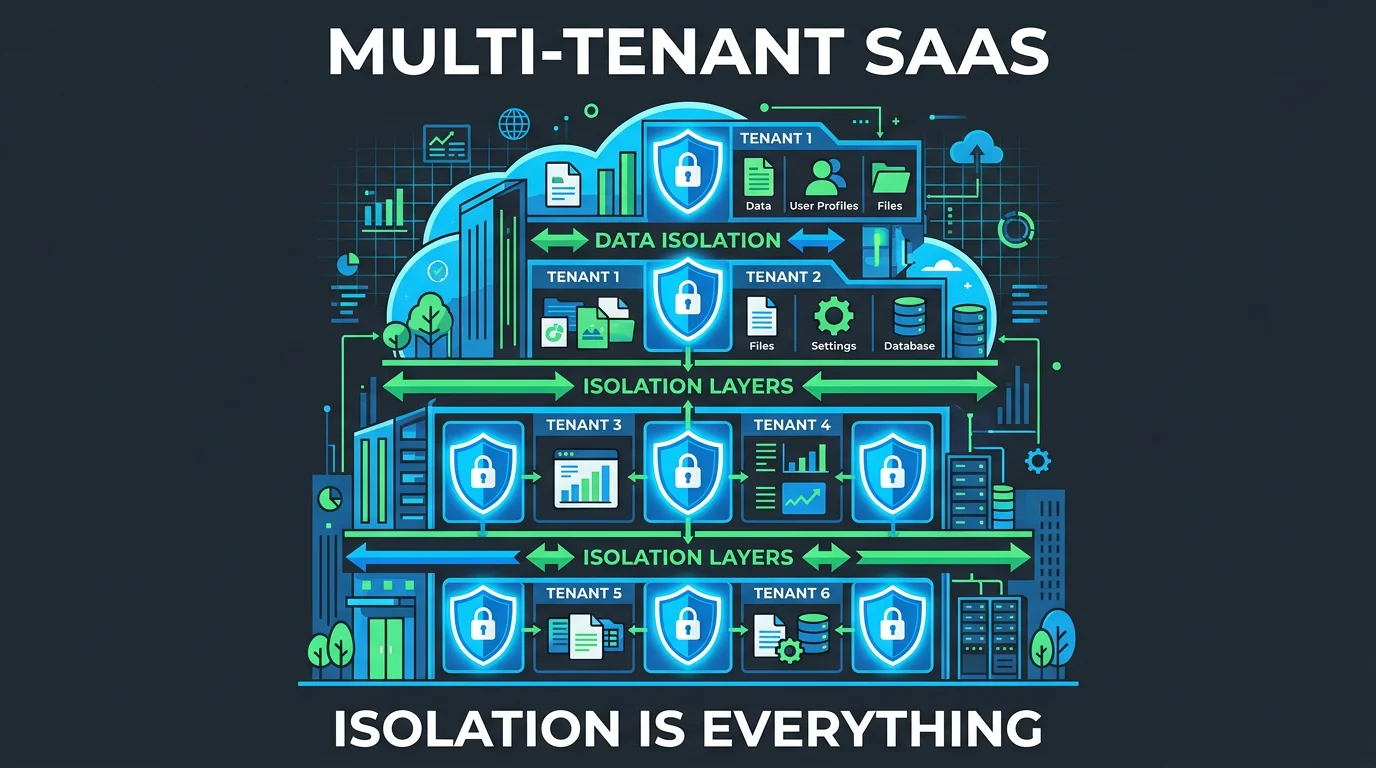
Multi-tenant SaaS applications face a fundamental challenge: multiple customers share the same infrastructure while keeping their data isolated. The architecture you you choose determines how well you scale, how isolated your tenants remain, and how complex the development becomes.
The wrong architecture creates a monolithic bottleneck that limits your growth. The right architecture enables each tenant to scale independently.
What Multi-Tenancy Means
| Aspect | Single-Tenant | Multi-Tenant |
|---|---|---|
| Database | One per customer | Shared or isolated |
| Application code | Deployed per customer | Shared across tenants |
| Infrastructure | Independent per customer | Shared with isolation |
| Updates | Per customer | Affects all tenants |
| Cost | Higher (redundancy) | Lower (resource sharing) |
Isolation Strategies
The isolation strategy determines how well you protect tenant data and how independently you tenants can scale.
Strategy 1: Shared Database with Row-Level Isolation
All tenants share the database, but each table includes a tenant_id column for filtering.
CREATE TABLE orders (
  id SERIAL PRIMARY KEY,
  tenant_id INTEGER NOT NULL,
  customer_id INTEGER,
  total_cents BIGINT,
  created_at TIMESTAMP DEFAULT NOW(),
  -- All queries include tenant_id filter
  -- CREATE INDEX idx_tenant_created ON orders(tenant_id, created_at);
);
Pros:
- Simple to implement
- Cost-efficient at small scale
- Easy cross-tenant queries for analytics
Cons:
- Noisy neighbor problems at scale
- Complex to add per-tenant schemas
- Security requires careful implementation
- Migration complexity for separating tenants later
Strategy 2: Schema-Level Isolation
Each tenant gets their own database schema within a shared database instance.
-- Tenant A schema
CREATE SCHEMA tenant_a (
  CREATE TABLE orders (...),
  CREATE TABLE customers (...)
);

-- Tenant B schema
CREATE SCHEMA tenant_b (
  CREATE TABLE orders (...),
  CREATE TABLE customers (...)
);
Pros:
- Better isolation than row-level
- Per-tenant schema flexibility
- Easier to migrate tenants later
- Simpler security model
Cons:
- More complex to implement
- Cross-tenant analytics harder
- More migration overhead for changes
- Connection management complexity
Strategy 3: Database-Level Isolation
Each tenant gets their own database instance.
-- Tenant A connects to tenant_a.db
-- Tenant B connects to tenant_b.db
-- Application routes connections based on tenant context
Pros:
- Maximum isolation
- Independent backup/restore per tenant
- Per-tenant scaling possible
- Easiest security model
- Can offer on-premises dedicated databases
Cons:
- Most complex to implement
- Resource overhead at small scale
- Cross-tenant operations harder
- Infrastructure management complexity
Choosing Your Strategy
| Factor | Row-Level | Schema-Level | Database-Level |
|---|---|---|---|
| Isolation strength | Low | Medium | High |
| Implementation complexity | Low | Medium | High |
| Cost at small scale | Low | Medium | High |
| Scalability | Low | Medium | High |
| Per-tenant flexibility | Low | Medium | High |
| Analytics capability | High | Medium | Low |
Recommendation:
- <100 tenants: Row-level isolation is usually sufficient
- 100-1000 tenants: Schema-level isolation provides better balance
- >1000 tenants or enterprise requirements: Database-level isolation for maximum flexibility
Tenant Context Management
Every request needs tenant context to apply isolation.
Context Propagation Patterns
// Middleware approach
app.use((req, res, next) => {
  const tenantId = req.user.tenantId; // From authentication
  req.tenantId = tenantId;
  next();
});

// Service approach
class TenantService {
  private tenantId: string;

  constructor(tenantId: string) {
    this.tenantId = tenantId;
  }

  // All database queries automatically include tenant_id
}
Common Mistakes
| Mistake | Consequence | Prevention |
|---|---|---|
| Forgetting tenant filters | Cross-tenant data access | Always include tenant_id in queries |
| Hardcoding tenant IDs | Deployment complexity | Use configuration and context |
| No tenant context in migrations | Migration failures | Include tenant context in all DB operations |
| Shared mutable state across tenants | State corruption | Keep tenant context isolated |
| Ignoring tenant-specific indexes | Performance issues | Create per-tenant indexes as needed |
Multi-tenant architecture requires upfront thinking but the complexity can be managed. If you’re building SaaS and need guidance on isolation strategies, book a consultation. We’ll help you choose the right approach for your scale.