Development March 16, 2026
Signs Your Legacy System Needs Modernization
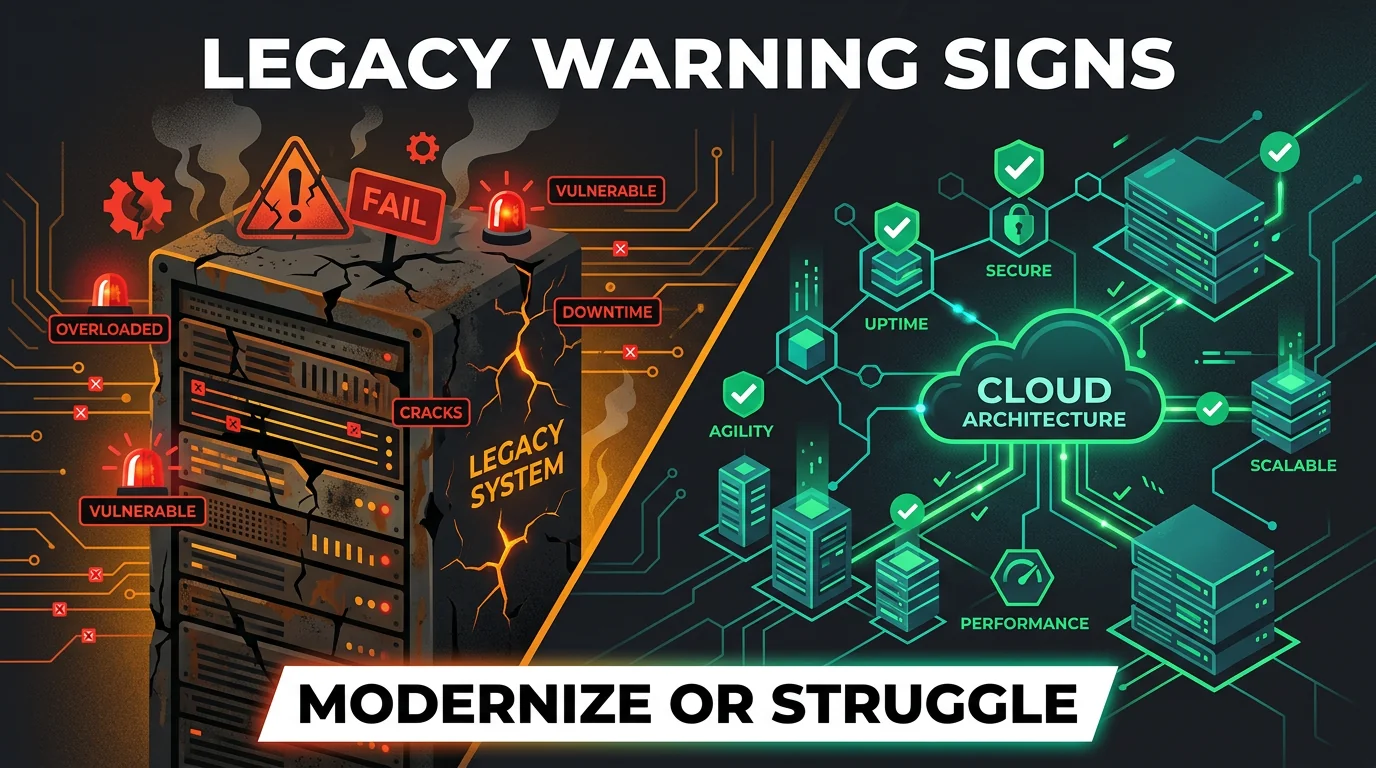
Legacy systems accumulate technical debt, but at some point, modernization becomes inevitable. Here are the warning signs that indicate it's time to act.
J
Jason Overmier
Innovative Prospects Team
Legacy systems accumulate technical debt, but at some point, modernization becomes inevitable. The longer you the more expensive it becomes. Here are the warning signs that indicate it’s time to act.
Warning Signs
| Category | Specific Signs | Risk Level |
|---|---|---|
| Performance | Slow response times, frequent timeouts | High |
| Security | Known vulnerabilities, no recent patches | High |
| Maintenance | Expensive fixes, scarce expertise | High |
| Scalability | System can’t handle load growth | Medium-High |
| Business agility | Can’t add features quickly | Medium-High |
| Integration | Breaking APIs, manual workarounds | Medium |
When to Modernize
| Scenario | Action |
|---|---|
| Performance critical | Address performance immediately |
| High security risk | Modernize security components first |
| Stalled feature development | Plan modernization project |
| Integration failures | Modernize integration layer |
| Proactive improvement | Plan modernization in phases |
The Business case
| Factor | What you get |
|---|---|
| Business agility | Can ship features faster again |
| Operational costs | Lower maintenance and cloud bills |
| Team morale | Work with modern tools and technologies |
| Competitive position | Faster response to market changes |
| Customer satisfaction | Better performance and reliability |
Legacy modernization is an major undertaking, but ignoring the warning signs is far more expensive in the long run. If you’re seeing these warning signs in your systems, book a consultation. We’ll help you assess your modernization path.